LEIB AD 2 AERODROME DATA
Aerodrome location indicator and nameAERODROME LOCATION INDICATOR - NAME
LEIB - IBIZA
AERODROME GEOGRAPHICAL AND ADMINISTRATIVE DATA
ARP |
385222N 0012223E. See AD 2-LEIB ADC. |
|
Distance and direction from the city |
7 km SW. |
|
Elevation |
7 m / 23 ft. |
|
Geoid ondulation |
48.85 m ± 0.05 m (1). |
|
Reference temperature |
30°C. |
|
Low average temperature |
11ºC. |
|
Magnetic variation |
1º E (2020). |
|
Annual change |
7.1'E. |
|
AD administration |
Aena. |
|
Address |
Aeropuerto de Ibiza, 07817 Ibiza, (Baleares). |
|
TEL |
+34-971 809 000 |
|
FAX |
+34-971 809 287 |
|
AFTN |
LEIB |
|
Approved traffic |
IFR/VFR. |
|
Remarks |
(1) For all AD points. |
OPERATIONAL HOURS
Airport |
V: H24. I: Until October 31st: H24. From November 1st: 0630-2300. PS 1 HR PPR. |
|
Customs and Immigration |
HR AD. |
|
Health and Sanitation |
Yes. HR AD. |
|
AIS/ARO |
H24. (1) |
|
MET briefing |
V: H24. I: HR AD PS 2 HR BFR HR AD. |
|
ATS |
HR AD. |
|
Fuelling |
HR AD. |
|
Handling |
HR AD. |
|
Security |
HR AD. |
|
De-icing |
No. |
|
Remarks |
(1) Oficina ARO Centralizada zona geográfica 7.
Centralised AIO Office - International NOTAM Office.
|
HANDLING SERVICES AND FACILITIES
Cargo facilities |
No limitations. |
|
Fuel types |
100LL, JET A-1. |
|
Oil types |
W100. |
|
Refuelling capacity |
100LL: 1 fixed equipment (petrol pump), 1.66 L/s, for aircraft with a wingspan of less than 15 m. JET A-1:
|
|
De-Icing facilities |
No. |
|
Hangar space |
No. |
|
Repair facilities |
No. |
|
Remarks |
Ramp agents:
Ramp agents may attend both commercial and general aviation. General and Business Aviation Managers (FBO) (in alphabetical order): For passengers and crew who opt to access through the General Aviation terminal, the General and Business Aviation Managers (FBO) authorised by the airport are:
General Aviation handling agents (in alphabetical order):
Fuelling agent:
|
PASSENGER FACILITIES
Hotels |
No. |
|
Restaurant |
Yes. |
|
Transportation |
Buses and taxis. |
|
Medical facilities |
First aid. (1) |
|
Bank/Post Office |
Cash dispensers (2) / No. |
|
Tourist information |
From May to October: MON-SAT 0800-2100 (LT), SUN and holiday 0800-1500 (LT). From November to April: MON-SAT 0800-1500 (LT), SUN and holiday closed. |
|
Remarks |
(1) Limited hours. (2) Exchange office, VAT refund and money transfer open from April 1st to October 31st. |
Rescue and firefighting servicesRESCUE AND FIREFIGHTING SERVICES
Fire category |
9 from April 1st until October 31st. (2). 7 from November 1st until March 31st. (1) (2). |
|
Rescue equipment |
In accordance with the fire category published. |
|
Minimum reserves of fire extinguishing agents in the airport |
|
|
Removal of disabled aircraft |
Tractor and main bar. Aircraft lifting gear. Recovery loading platform for 12.5 TM of load and 100 TM drawbar. Recovery loading platform or 5 TM, 10 TM and 30 TM of load. Hydraulic jack with a cargo capacity of 25 TM. Cradle of 16 TM. Lifting bags kit (14 and 31 TM). Debogging equipment (20 TM). Tethering equipment. Ground reinforcement mats. (3). |
|
Remarks |
(1) 9 on demand (in accordance with the procedure for the request of level of protection on demand). (2) The response time of the rescue and fire fighting service is less than 3 MIN, with an operational objective than 2 MIN. (3) CECOA contact details:
|
Runway surface condition assessment and reporting, and snow planRUNWAY SURFACE CONDITION ASSESSMENT AND REPORTING, AND SNOW PLAN
Types of clearing equipment |
Not applicable. |
|
Clearance priorities |
Not applicable. |
|
Use of material for movement area surface treatment |
Not applicable. |
|
Specially prepared winter runways |
Not applicable. |
|
Remarks |
Runway surface condition assessment and reporting in accordance with the Global Reporting Format (GRF) methodology described in AD 1.2.2. Aerodrome in service during all seasons of the year. |
Aprons, taxiways and check locations/positions dataMOVEMENT AREA DETAILS
Apron |
Surface: Commercial Aviation: Concrete. General Aviation and Fire Fighting Service: Asphalt. Strength: Stands: PCN 46/R/A/W/T EXC PRKG K1 to K8: PCN 103/R/C/W/T. Apron inner TWY: PCN 113/R/A/W/T. General Aviation: PCN 43/F/A/W/T. Fire Fighting Service and PRKG 1X and 2X: PCN 38/F/A/W/T. |
|
Taxiways |
Width: 23 m, EXC E1 and E10: 19 m; G3: 10.5 m and EH: 10 m. Surface: Asphalt, EXC access to thresholds: Concrete. Strength: TWY E3, E6, E8, T: PCN 130/F/A/W/T. TWY E1, E2, E9, E10: PCN 61/R/A/W/T. TWY E4, E5, E7: 104/F/A/W/T. Join Commercial Aviation apron with TWY T: PCN 130/F/A/W/T. TWY EH: air taxiing, closed surface. |
|
Check locations |
Altimeter Apron: ELEV 12 m / 39 ft. VOR: No. INS: See AD 2-LEIB PDC. |
|
Remarks |
None. |
Surface movement guidance and control system and markingsTAXIING GUIDANCE SYSTEM AND MARKINGS
Taxiing guidance system |
Signboards, stop bars, runway-holding positions, intermediate holding positions (1), no-entry bars and signs and stands signs. (2) |
|
RWY markings |
Designators, threshold, centre line, side stripe, touchdown zone, aiming point. |
|
TWY markings |
Centre line and side stripe. (2) |
|
Remarks |
(1) LED lighting. (2) EXC TWY EH: border markers and runway guard lights. |
AERODROME OBSTACLES
Obstacles in Approach, Take-Off Climb, Conical, Inner Horizontal, Transitional, Inner Transitional and Balked Landing Surfaces established in ICAO Annex 14; and the areas 2A and 3 established in ICAO Annex 15. Those penetrating these surfaces are identified in the CSV file as "Relevante_Relevant = Si/Yes". |
See Item 10 and Data Set. |
|
Remarks |
See AD 2-LEIB AOC. |
Meteorological information providedMETEOROLOGICAL SERVICE PROVIDED
MET office |
Ibiza EMAe. |
|
HR |
V: H24; I: HR AD PS 2 HR BFR HR AD. Outside these hours, a half-hourly METAR AUTO will be issued. |
|
METAR |
Half-hourly. |
|
TAF |
24 HR. |
|
TREND |
Yes. |
|
Briefing |
In person and by telephone. |
|
Flight documentation/Language |
Charts and plain language / Spanish. |
|
Charts |
Significant weather charts, upper-air forecast charts (wind and temperature). |
|
Supplementary equipment |
Cloud, lightning and radar information image display. |
|
ATS unit served |
TWR, APP. |
|
Additional information |
Valencia OMAe (LEVA): H24
Ibiza EMAe: HR AD
|
|
Remarks |
Aerodrome climatological summary available. Aerodrome warnings available. |
RUNWAY PHYSICAL CHARACTERISTICS
RWY |
Direction |
DIM (m) |
THR PSN |
THR ELEV TDZ ELEV |
SWY (m) |
CWY (m) |
Strip (m) |
OFZ |
RESA (m) |
RWY/SWY SFC PCN |
|---|---|---|---|---|---|---|---|---|---|---|
06 |
062.09°GEO 061°MAG |
2799 x 45 |
385201.02N 0012131.96E |
THR: 4.6 m/15 ft TDZ: 5.9 m/19 ft |
No |
60 x 150 |
2919 x 295 (3) |
No |
240 x 150 |
RWY: ASPH PCN 130/F/A/W/T. PCN 84/R/A/W/T. (1) SWY: No |
24 |
242.10°GEO 241°MAG |
2799 x 45 |
385243.51N 0012314.59E |
THR: 5.5 m/18 ft TDZ: 6.9 m/23 ft |
No |
60 x 150 |
2919 x 295 (3) |
No |
240 x 150 |
RWY: ASPH PCN 130/F/A/W/T. PCN 84/R/A/W/T. (2) SWY: No |
Remarks: (1) First 104 m RWY 06 hydraulic concrete. (2) First 104 m RWY 24 hydraulic concrete. (3) Exemption from the runway strip width requirement: Runway strip 295 m wide instead of 300 m. RWY 06 right side: strip 145 m. Last 193 m RWY 06 right side: strip decreases to 138 m (see AD-2 LEIB ADC). |
||||||||||
Profile
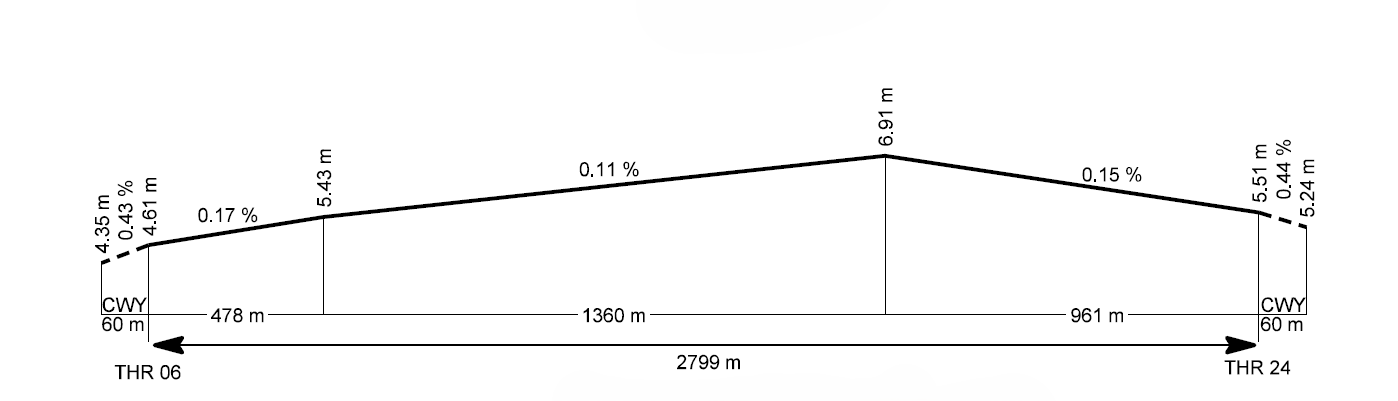
DECLARED DISTANCES
RWY |
TORA (m) |
TODA (m) |
ASDA (m) |
LDA (m) |
|---|---|---|---|---|
06 |
2799 |
2859 |
2799 |
2799 |
24 |
2799 |
2859 |
2799 |
2799 |
06 INT E8 |
2415 |
2475 |
2415 |
– |
24 INT E3 |
2356 |
2416 |
2356 |
– |
06 INT EH |
1022 |
1082 |
1022 |
– |
24 INT EH |
1782 |
1842 |
1782 |
– |
Remarks: None. |
||||
APPROACH AND RUNWAY LIGHTING
Runway |
06 |
|
Approach |
Precision CAT I 300 m LIH. |
|
PAPI (MEHT) |
3º (17.25 m / 57 ft). |
|
Threshold |
Green with wing bars. |
|
Touchdown zone |
No. |
|
Runway centre line |
2799 m: 1899 m white+600 m red/white+300 m red. LIH. Distance between lights: 15 m. |
|
Runway edge |
2799 m: 2199 m white + 600 m yellow LIH. Distance between lights: 50 m. |
|
Runway end |
Red. |
|
Stopway |
No. |
|
Remarks |
Rapid exit taxiway indicator lights (E4 and E5). LED lighting on runway center line lights, RETIL lights and runway guard lights of rapid exit (E4 and E7). |
Runway |
24 |
|
Approach |
Precision CAT I 900 m LIH. |
|
PAPI (MEHT) |
3º (18.27 m / 60 ft). |
|
Threshold |
Green with wing bars. |
|
Touchdown zone |
No. |
|
Runway centre line |
2799 m: 1899 m white+600 m red/white+300 m red. LIH. Distance between lights: 15 m. |
|
Runway edge |
2799 m: 2199 m white + 600 m yellow LIH. Distance between lights: 50 m. |
|
Runway end |
Red. |
|
Stopway |
No. |
|
Remarks |
Rapid exit taxiway indicator lights (E6 and E7). LED lighting on runway center line lights, RETIL lights and runway guard lights of rapid exit (E4 and E7). |
OTHER LIGHTING, SECONDARY POWER SUPPLY
ABN/IBN |
No. |
|
WDI |
1 near THR 06, 1 near THR 24. LGTD. |
|
TWY lighting |
Centre line and edge only in curves. |
|
Apron lighting |
Floodlighting poles and apron edge with retroreflective markers. |
|
Secondary power supply |
Engine generators and uninterruptible power supply that provide a maximum switch-over (light) time of 1 second for the following systems: runway centre line, runway end and stop bars, and a maximum of 15 seconds for the rest of the lighting systems. |
|
Remarks |
None. |
HELICOPTER LANDING AREA
Position |
Geoid undulation: see item 2. FATO: RWY 06/24. Coordinates THR 06 and THR 24, see item 12. Ground taxiing: TLOF same as RWY 06/24. Coordinates THR 06 & THR 24, see item 12. Air taxiing: TLOF same as PRKG 7 to 12, 32, 33, 1X, 2X, 73M, 74M, 75M, 76M, see AD 2-LEIB PDC. |
|
Elevation |
FATO: RWY 06/24. Elevation THR 06 and THR 24, see item 12. Ground taxiing: TLOF same as RWY 06/24, see item 12. Air Taxiing: TLOF same as PRKG 7 to 12, 32, 33, 1X, 2X, 73M, 74M, 75M, 76M. (*) See table below |
|
Dimensions, surface, maximum weight, marking |
FATO: RWY 06/24. Ground taxiing: TLOF same as RWY 06/24, see item 12. Air Taxiing: TLOF same as PRKG 7 to 12, 32, 33, 1X, 2X, 73M, 74M, 75M, 76M. PRKG: 7 to 12, 32, 33, 1X, 2X, 73M, 74M, 75M, 76M. Dimensions of MAX ACFT see PDC 1.2. Strength, see item 8. |
|
Direction |
No. |
|
Declared distances |
See item 13. |
|
Lighting |
See item 14. |
|
Remarks |
See item 20, local regulations, helicopter taxiing procedure. |
(*)
RAMP |
PRKG |
ELEV (m) |
|---|---|---|
– |
7 |
11.74 |
– |
8 |
11.75 |
– |
9 |
11.72 |
– |
10 |
11.63 |
– |
11 |
11.44 |
– |
12 |
11.63 |
– |
32 |
12.99 |
– |
33 |
12.94 |
General Aviation |
1X |
12.86 |
General Aviation |
2X |
12.61 |
General Aviation |
73M |
11.60 |
General Aviation |
74M |
11.50 |
General Aviation |
75M |
11.42 |
General Aviation |
76M |
11.01 |
Air traffic services airspaceATS AIRSPACE
Designation |
CTR IBIZA. |
|
Lateral limits |
385240N 0011034E, 385518N 0011655E, 385356N 0011751E, 390037N 0013403E, 385542N 0013722E, 385402N 0013317E, 384936N 0013617E, 384510N 0012534E, 384623N 0012444E, 384311N 0011701E, 385240N 0011034E. |
|
Vertical limits |
SFC - 2500 ft AMSL. |
|
Airspace class |
D. |
|
Unit Language |
IBIZA TWR (1). ES/EN. |
|
Transition altitude |
1850 m / 6000 ft. |
|
Hours of applicability |
- |
|
Remarks |
(1) Call sign: Ibiza TWR. HR ATS: see item 3. |
Air traffic services communication facilitiesATS COMMUNICATION FACILITIES
Service |
Call sign |
FREQ |
HR |
Remarks |
|---|---|---|---|---|
APP |
Palma Control |
134.825 MHz |
HR H24 |
APP/I |
TWR |
Ibiza TWR |
118.505 C |
HR AD |
- |
121.380 C |
(1) |
CLR. (1) Activity announced by ATIS |
||
121.500 MHz |
HR AD |
EMERG |
||
121.930 C |
HR AD |
GMC |
||
243.000 MHz |
HR AD |
EMERG |
||
257.800 MHz |
HR AD |
MIL |
||
ATIS |
Ibiza Information |
119.805 C |
HR AD |
- |
D-ATIS |
Ibiza Information |
NIL |
HR AD |
Provision of ATIS information via data link. |
Radio navigation and landing aidsRADIO NAVIGATION & LANDING FACILITIES
Facility (VAR) |
ID |
FREQ |
HR |
Coordinates |
DME ELEV |
Remarks |
|---|---|---|---|---|---|---|
VOR (1º E) |
IBA |
117.800 MHz |
H24 |
385206.0N 0012157.4E |
- |
Only usable for published approaches.
|
DME |
IBA |
CH 125X |
H24 |
385206.3N 0012157.9E |
0 m |
COV at 40 NM AVBL BTN:
|
NDB (1º E) |
IZA |
394.000 kHz |
H24 |
385455.7N 0012813.5E |
- |
COV 60 NM. |
LOC 06 (1º E) ILS CAT I |
IBI |
111.100 MHz |
H24 |
385248.4N 0012326.4E |
- |
061º MAG / 322 m FM THR 24. COV 25 NM AVBL BTN ±10º FM RCL at 2300 ft AMSL or ABV. COV 17 NM (15.6 NM DME) AVBL BTN ±35º FM RCL at 3000 ft AMSL or ABV. |
GP 06 |
- |
331.700 MHz |
H24 |
385202.1N 0012144.7E |
- |
3º; RDH 15.72 m; at 287 m FM THR 06 & 115 m FM RCL to the right in direction APCH. Full fly-up indications may not be received at 1500 ft AMSL and beyond 6º right of RCL. |
ILS/DME 06 |
IBI |
CH 48X |
H24 |
385202.4N 0012144.5E |
9 m |
REF DME THR 06. |
LOC 24 (1º E) ILS CAT I |
IBZ |
109.500 MHz |
H24 |
385156.3N 0012120.7E |
- |
241° MAG / 307 m FM THR 06. COV 25 NM AVBL BTN ±10º FM RCL at 2500 ft AMSL or ABV. COV 17 NM (15.4 NM DME) AVBL BTN ±35º FM RCL at 3100 ft AMSL or ABV. |
GP 24 |
- |
332.600 MHz |
H24 |
385235.5N 0012306.0E |
- |
3°; RDH 15.37 m; at 297 m FM THR 24 & 123 m FM RCL to the left in direction APCH. |
ILS/DME 24 |
IBZ |
CH 32X |
H24 |
385235.7N 0012305.8E |
9 m |
REF DME THR 24. |
Local aerodrome regulationsLOCAL REGULATIONS
AIRPORT REGULATIONS
All General Aviation and Business aircraft must contract ground handling services, in accordance with AD 1.1 section in the AIP for Spain.
From May 1st until October 15th (both inclusive), training and school flights are not allowed during Fridays, Saturdays and Sundays.
Flights in VFR conditions are exempt from the previous request for airport slot.
ARR/DEP of jet aircraft under VFR are not authorized.
From 1 May to 15 October, all General Aviation aircraft with a wingspan exceeding 18 m and helicopters with a maximum dimensions of 12 m, for stop-overs longer than 3 hours, must request the stand prior to the operation via a handling agent.
In this case, requesting the airport slot requires prior parking authorisation from the Airport.
From June 01st until September 30th, the maximum parking time of an aircraft with a maximum wingspan of 18 m in the Commercial Aviation Apron is one week.
In summer season, all General Aviation operators whose aircraft remain parked on the commercial apron, must be prepared, upon request from the airport channelled through the appropriate handling agent, to relocate the aircraft on the same apron or another, within no more than 3 hours.
EXCHANGE OF DATA WITH NMOC-ADVANCED ATC TWR
The airport of Ibiza exchanges information for departure flights by applying the Advanced ATC TWR procedures.
Message exchanges from the local system to the ATM network uses the European standard for A-CDM airports, using the following message types:
-
A-DPI: for all instrumental departure flights.
-
C-DPI: when required.
When start-up approval has been announced and the aircraft starts to exit the stand, the target take-off time (TTOT) is calculated and transmitted to NMOC (Network Manager Operations Center) via an A-DPI message. The use of the actual off-block time (AOBT) instead of the EOBT of the flight plan, along with the variable taxiing time, increases the precision of the take-off time.
After reception of the A-DPI, DLA or CHG messages that change the flight plan data shall not be accepted. If regulated, the CTOT assigned before receiving the A-DPI shall be maintained.
If an aircraft has to abort taxiing for technical reasons, the airport shall send a C-DPI message to the NMOC. The result of the C-DPI is that the flight plan shall be suspended by informing the operator via an FLS message with the comment "Suspended by Departure airport". The flight plan can be activated again by updating the EOBT with a DLA or CHG message.
ATC AUTHORIZATION REQUEST AND START-UP VIA DATA LINK
DCL departure procedures are applied at Ibiza airport in the provision of ATC clearance and start-up services. For more information on the DCL service, see AIP ENR 1.5, section 3. DEPARTING FLIGHTS, ATC Clearance and start-up via data link (DCL).
In case of discrepancies, voice communications will always prevail over data link.
The pilot may request the ATC clearance by DCL with a maximum of 30 minutes before the EOBT.
The pilot must request ATC and start-up clearance together via RCD. The RCD message (Departure Clearance Request) must contain the following information:
-
Aircraft callsign in accordance with the filed flight plan (FPL).
-
Aerodrome of origin.
-
Aircraft stand.
-
Destination aerodrome.
-
Letter corresponding to the ATIS information received.
-
ICAO aircraft type designator.
Any free text sent via the RCD by the pilot will not be considered by the ATC. Special requests will always be made via voice communications.
The pilot will receive a message acceptance "RCD RECEIVED" or cancellation "RCD REJECTED".
Ranges of time established for requesting start-up clearance:
-
Aircraft without assigned CTOT: From 15 minutes before their EOBT up to 10 minutes after their EOBT.
-
Aircraft with assigned CTOT: From 15 minutes before their CTOT up to 10 minutes before their CTOT, if they are parked on stands with exit by towed push-back, or from 15 minutes before their CTOT to 5 minutes before their CTOT for the remaining stands.
-
To improve the predictability of the TTOT, ATC may issue instructions for start-up clearance to be requested at a specific time.
-
In periods of high demand, ATC may apply other values which guarantee compliance with the tolerance window of the flight.
When an RCD message is received before the stablished ranges, the RCD will be accepted and CLD with ATC clearance will be sent, reminding the crew to call when they are ready and in accordance with their EOBT/CTOT.
When an RCD message is received within the stablished ranges, the RCD will be accepted and CLD with ATC clearance and start-up approval will be sent.
When communicating approval, Ibiza Clearances will issue a CLD message with the following fields:
-
Aircraft callsign.
-
Destination aerodrome.
-
Assigned runway for departure.
-
Take-off procedure (SID).
Note: The initial altitude will correspond to the published SID.
-
SSR code mode A (SQUAWK).
-
ADT (Approved Departure Time).
Note: ADT = CTOT of the flight, if applicable.
-
Next frequency.
-
Current ATIS information letter.
-
Additional information, which will include start-up clearance or instructions to request it.
When an FSM message of the type "REVERT TO VOICE PROCEDURES" is received, communication via data link will be terminated and must be reverted to voice procedures.
When a CLD message is received, the pilot:
-
If any inconsistencies in the received message are detected, the pilot must revert to voice procedures and request a new authorization.
-
If the pilot considers the authorization CLD message to be correct, he/she must respond via data link with a CDA message.
-
If not ready for start-up, the pilot must not accept the authorization and will contact via voice communications to the controller when ready.
If a CDA message is not received by the pilot within the waiting time, or a CDA that is inconsistent with the previous CLD message is received, communication via data link will be terminated and a "CDA REJECTED" message will be received in the FMS.
When the correct CDA message is received, the ATC system will send the aircraft a "CLEARANCE CONFIRMED" message in the FMS and will terminate the communication via data link.
The push-back and/or taxiing request must be made on the appropriate frequency included in the corresponding CDA message.
REVERT TO VOICE PROCEDURES
Upon receiving a message of the type "REVERT TO VOICE PROCEDURES", or in the event of any inconsistency in the authorization received, the pilot will contact via voice communications with the controller and request a new authorization.
GROUND MOVEMENT
APRON
The following indications must be followed when Accessing / Exiting the Apron, unless otherwise instructed by the Aerodrome Control Service:
-
For fixed-wing aircraft parked in the GENERAL AVIATION APRON (52S to 105N; 301-302):
-
Access to apron: GATE G2 (turn right to take the taxiway centre line on the apron).
-
Exiting the apron: GATE G3.
-
-
For fixed-wing aircraft parked in the COMMERCIAL APRON (7 to 37; K1 to K8):
-
Runway in use RWY 24:
-
Access to apron:
-
PRKGs 7-18 - Directly from T.
-
Other PRKGs - GATE G1:
-
PRKG 19 to 23, and K1 to K8, turn left to take the taxiway centre line on the apron.
-
PRKG 25B to 37, turn right to take the taxiway centre line on the apron.
-
-
-
Exiting the apron:
-
Code Letter E Aircraft - GATE G1.
-
Code Letters A-D Aircraft - GATE G2.
-
-
-
Runway in use RWY 06:
-
Access to apron:
-
Code Letter E Aircraft - GATE G1, turn left to take the taxiway centre line on the apron.
-
Code Letters A-D Aircraft:
-
PRKGs 7-18 - Directly from T.
-
Other PRKGs - GATE G2, turn left to take the taxiway centre line on the apron.
-
-
-
Exiting the apron:
-
GATE G1.
-
-
-
-
For HELICOPTERS, the apron access and exit points will be as follows:
-
Access to apron:
-
PRKGs 7 to 12 - Directly from T.
-
Other PRKGs - GATE G2:
-
PRKGs 1X, 2X and 73M to 76M, turn right to take the taxiway centre line on the apron.
-
PRKGs 32-33, turn left to take the taxiway centre line on the apron.
-
-
-
Exiting the apron:
-
GATE G2.
-
-
In the event that there is a situation on the apron that blocks the direction of traffic following the information given above (push-back, incident, works...), the entry/exit gate to the apron will be modified, taking into consideration that:
-
GATE G2 is limited to aircraft with a maximum wingspan of 52 metres.
-
GATE G3 is limited to aircraft with a maximum wingspan of 18 metres, with no helicopters allowed through.
TAXIING PROCEDURE IN APRON
-
Start-up of engines/jets.
To prevent flight plans from being automatically suspended, the EOBT must be kept up to date.
-
Clearance to start the engines/jets shall be requested on the appropriate frequency broadcast on ATIS. At the time of requesting this clearance, the aircraft must be fully ready for immediate start-up.
-
On initial contact, pilots shall notify ATC of the full call sign of the aircraft, the parking stand occupied, and the ATIS message received.
-
-
Avoidance of collisions with other aircraft or obstacles is the responsibility of:
-
Pilots, when taxiing on the apron.
-
Ground handling companies during push-back or parking stand exit manoeuvres.
-
-
Aircraft with a wingspan of 52 m or more shall report it to ATC on initial call, both on arrival and departure.
-
Aircraft with a wingspan of 52 m or shall access the platform through GATE G1.
-
Aircraft shall inform ATC when they are ready to commence towed push-back.
Aircraft must be ready to taxi within 5 minutes of the approved start-up time, otherwise the pilot shall inform ATC.
In the event that an incorrect push-back is detected, TWR may request the pilot in command to re-park the aircraft.
-
Unless otherwise instructed by ATC, push-back manoeuvres will be carried out as follows:
Commercial Aviation Apron:
-
Towards the east with RWY 24 in service and towards the west with RWY 06 in service, except PRKG 37 to be nosed in straight with RWY 06 in service.
-
Towards the north-west always on PRKGs K1 to K8.
General Aviation Apron:
-
Towards the east on PRKG from 53S to 68S and from 73M to 88M.
-
Towards the south on PRKG from 90N to 105N.
-
-
The use of reverse thrust in push-back operations is prohibited on the apron.
-
ATC clearances and instructions must be read back.
-
TWR will provide the parking stand number to the pilot once the aircraft is on the ground.
-
At General Aviation positions and PRKG 19, 19A, 19B, 20, 20A, 20B, 25B, and positions where the visual docking guidance system is out of service, the "FOLLOW ME" vehicle will guide the parking manoeuvre.
-
The "FOLLOW ME" vehicle guidance service will also be provided in exceptional situations when requested by TWR or at the request of the pilot.
-
-
VFR traffic shall make the initial call when ready to taxi. In the initial call they shall report their PRKG and the CTR exit point. The initial call must be made within 15 MIN before the EOBT until 30 MIN after the EOBT.
-
In the event that, for any reason whatsoever, a significant increase in thrust power is required inside the apron, the pilot in command of the aircraft shall coordinate with the Aerodrome Control Service so that the manoeuvre is supervised by a signalman.
HELICOPTER TAXIING PROCEDURE
Helicopters shall conduct approaches towards RWY 06/24 and take-offs at RWY 06/24, as the FATO coincides with the runway.
Helicopter operators with letters of exemption and conducting a special operation under the Air Traffic Regulations may operate according to the local airport procedure for such operations. To do so, they must contact the airport's ATC service.
Helicopters with wheel-type landing gear shall land at RWY 06/24, as the declared TLOF coincides with the FATO, and taxi to the parking stand. In order to exit PRKG 32, 33, 73M, 74M, 75M, 76M, these aircraft shall perform an aerial turn.
Helicopters with skid-type landing gear shall approach RWY 06/24 and once hovering, will air taxi to the parking stand.
Air movement routes are not enabled.
PERSONNEL MOVEMENT IN APRON
General and Business Aviation must conduct internal Terminal-to-CECOA/CECOPS Office-to-Aircraft personnel transfers in a handling agent vehicle authorised to do so.
RESCUE PROTECTION AND FIRE FIGHTING LEVEL REQUEST APPLICATION PROCEDURE ON REQUEST FROM NOVEMBER 1ST TO MARCH 31ST
An operator wishing to operate in Ibiza Airport with aircraft above category 7, from November 1st to March 31st, shall apply to the airport, at least 3 days in advance of the scheduled arrival date, by sending an e-mail to:
reporting the following:
-
Application to operate an aircraft above category 7.
-
Model of planned aircraft.
-
Date and time of scheduled arrival.
-
Date and time of scheduled departure.
GROUND MOVEMENT UNDER LOW VISIBILITY CONDITIONS (LOW VISIBILITY PROCEDURES - LVP - ACTIVE)
Pilots will proceed to verify the position of their aircraft at each moment, checking that taxiing is being executed under conditions of complete safety. In case of being disoriented or in doubt, pilots will stop the aircraft and immediately notify TWR.
-
Aircraft operations will not be allowed when RVR values, or visibility where appropriate, are below 350 m.
-
For vehicles, the perimeter road will be closed, as will the service roads in apron that intersect the centre line of the taxiway.
-
In cases where the RVR is equal to or lower than 550 m (visibility ≤ 800 m in the event of failure of all RVR equipment), only one aircraft will be authorized to taxi at a time in the manoeuvring area. The taxiways to be used will be:
Arrivals (exit of runway):
-
RWY 24: TWY E8 or E9.
-
RWY 06: TWY E2 or E3.
Departures (entry to runway):
-
RWY 24: runway-holding position RWY 24 in TWY E2.
-
RWY 06: runway-holding position RWY 06 in TWY E9.
-
- The taxiing routes to be used will be, in general, as follows:
Arrivals:
- RWY 24: proceed to GATE G1 via TWY E8, T or TWY E9, T.
- RWY 06: proceed to GATE G2 via TWY E3, T or TWY E2, T.
Departures:
- Helicopters and aircraft parked in Commercial apron.
- RWY 24: proceed to runway-holding position RWY 24 via GATE G2, TWY T, E2.
- RWY 06: proceed to runway-holding position RWY 06 via GATE G1, TWY T, E9.
- Fixed-wing aircraft parked in General Aviation apron:
- RWY 24: proceed to runway-holding position RWY 24 via GATE G3, TWY T, E2.
- RWY 06: proceed to runway-holding position RWY 06 via GATE G3, TWY T, E9.
- Aircraft that have landed will notify:
- Runway vacated and
- Taxiway used.
-
Push-back manoeuvres will only be authorized when no other aircraft is in movement in the aerodrome.
-
The holding positions may only be occupied by one aircraft at a time.
-
There are no published standard taxiing routes for landing or take-off.
COMMUNICATIONS FAILURE
If an aircraft or vehicle operating in the manoeuvring area suffers a communications failure it shall proceed as follows:
-
Departing aircraft: The aircraft will continue by the assigned route to the ATC clearance limit, taking extreme care, where it will hold position and wait for the arrival of the "FOLLOW ME" vehicle that will guide it to the parking position or the designated holding bay/holding position.
-
Arriving aircraft: If the aircraft has just landed, it will hold position once it has vacated the runway completely and will wait for the arrival of the "FOLLOW ME" vehicle that will guide it to the designated parking position. If aircraft already holds ATC taxiing clearance, it shall continue by the assigned route, if any, to the ATC clearance limit, taking extreme care, where it shall hold position and wait for the arrival of the "FOLLOW ME" vehicle that will guide it to the parking position or the designated holding bay/holding position.
-
Vehicle: The vehicle will hold its position and will await the arrival of a "FOLLOW ME" vehicle that will guide it to the indicated place.
TAXIING LIMITATIONS
-
Whenever an aircraft is at the runway-holding position located in TWY E8, the following taxiing restrictions for TWY T will hold behind this aircraft:
ACFT LONG in TWY E8
MAX ACFT on TWY T
(Aircraft classification according to chapter 1 of Annex 14 ICAO)
L < 40 m
All
40 m ≤ L < 47 m
A, B, C & D
47 m ≤ L < 60 m
A, B & C
L ≥ 60 m
None
Whenever an aircraft is at the runway-holding position located in TWY E3, the following taxiing restrictions for TWY T will hold behind this aircraft:
ACFT LONG in TWY E3
MAX ACFT on TWY T
(Aircraft classification according to chapter 1 of Annex 14 ICAO)
L < 40 m
All
40 m ≤ L < 47 m
A, B, C & D
47 m ≤ L < 60 m
A, B & C
L ≥ 60 m
None
-
Simultaneous capacity restrictions in holding positions TWY E9/E10:
Code letter aircraft on holding position at TWY E9
MAX ACFT allowed to taxi in TWY E10
A
C
B
C
C
C
D
C
E length ≤ 73 m
B
E length > 73 m
A
Simultaneous capacity restrictions in holding positions TWY E1/E2:
Code letter aircraft on holding position at TWY E2
MAX ACFT allowed to taxi in TWY E1
A
C
B
C
C
C
D
C
E length ≤ 73 m
B
E length > 73 m
A
-
TWY E1 and E10: limited use to the maximum size of aircraft with code letter C (maximum wingspan until 36 m inclusive).
-
TWY E5 and E6: limited use to aircraft with code letter D (maximum wingspan up to 52 m inclusive).
-
Access taxiways to the General Aviation apron: limited use for aircraft of maximum wingspan 18 m, inclusively.
-
Access GATE G2 to apron: limited use to aircraft of maximum wingspan of 52 m inclusively.
-
Access GATE G3 from General Aviation apron: limited use to aircraft of maximum wingspan 18 m inclusive, without the possibility of helicopters taxiing on it.
-
PRKG K1 to K8, to the West of the Commercial Apron: limited used for aircraft of maximum wingspan of 32 m inclusively.
-
Aircraft with code letter E will not be able to make the turn THR 06-TWY E8 and THR 24-TWY E3.
-
RWY entry via TWY E8 and TWY E3 restricted for code letter E aircraft.
-
DC10 and MD11 models may only taxi on taxiways and access gates classified as code letter E.
-
Taxiway on the apron between GATES G1 and G2 is limited to aircraft with code letter D (maximum wingspan up to 52 m inclusive).
-
TWY EH limited use for helicopters in air taxiing.
USE OF RUNWAY
PREFERENTIAL RUNWAY
RWY 24, because of environmental reasons, will be preferential whenever the tailwind component does not exceed 5 kt and the runway surface is dry or wet with braking action good.
NIGHT VISUAL OPERATIONS (VFR-N)
Night visual operations are cleared.
OPERATIONAL SAFETY REPORTS
Pilots/operators shall report any accidents, incidents, occurrences or events that could have a potential impact on operational safety and which they may have been involved in or witnessed, to the airport as soon as possible.
The aim of these reports is the compilation of information to improve operational safety, independently of the mandatory reporting of the occurrence to the appropriate aeronautical authority. Data may be sent in any format, including at least the following information:
-
Date and time.
-
Site.
-
Parties involved (data used to identify vehicles, aircraft … involved).
-
Companies involved.
-
Description of the facts.
-
Any other data considered relevant (e.g. lighting conditions, weather, phase of the operation such as take-off/landing/stopover, pavement conditions …).
The contact e-mail address of the airport, for the reception of operational safety reports, is the following:
IbizaSeguridadOperacional@aena.es
In addition to notifying the airport by means of the indicated system, it is necessary to send at least basic data of the accident, incident, occurrence or event to the air traffic control service provider (ATC).
OPERATIONS OF CODE LETTER F AIRCRAFT
The operation with code letter F aircraft is not allowed.
ENERGY SAVINGS POLICY
The airport applies, from sunset to sunrise, and if there are no planned aircraft operations, energy-saving procedures consisting on turning surface aeronautical lights of runway and taxiways off.
NOISE ABATEMENT PROCEDURES
ENGINE TEST
Clearance schedule of the tests will be: I: From 0630 to 2259; V: From 0530 to 2159 UTC, should the power regime to be applied is medium or maximum.
Engine tests will be accomplished at the locations indicated by TWR.
This task must be accomplished in accordance with a local procedure.
The request for an engine test authorization must be addressed in writing to:
OFICINA CECOA/CECOPS:
-
FAX: +34-971 809 271
-
E-mail: ibizaoperacionesCPO@aena.es
and the following information must be included:
-
Registration number of the aircraft.
-
Engine test starting and ending hours.
-
Estimated duration.
-
Type of aircraft.
-
Power regime settings.
- LANDING
- REVERSE THRUST.- Reverse thrust other than idling may not be used except for safety reasons from 2200 to 0500.
- TAKE-OFF
Aircraft departing from RWY 06 shall proceed immediately after take-off as follows:
- Reduce engine power.
- Except for safety reasons, ATC will not provide direct left turn routes below 6,000 ft.
Aircraft taking off from RWY 24 shall proceed immediately after take-off as follows:
-
Reduce engine power.
-
Except for safety reasons, ATC will not provide direct right turn routes below 6,000 ft.
FLIGHT PROCEDURES
ARRIVAL PROCEDURES
Arriving aircraft with RNAV1 operational approval will be cleared to proceed via one of the published standard arrivals (STAR).
Aircraft without RNAV1 operational approval will be issued an ATC clearance to proceed to one navigation aid or conventional fix, a sequence of them, or will receive radar vectors.
Standard arrivals (STAR) CORDA1S, TOLSO2S and VARUT2Y are intended for noise abatement and will have a preferential use at night, subject to ATC clearance.
CLEARANCE LIMIT
Arriving aircraft proceeding on a Standard Arrival (STAR) will consider the IAF as clearance limit. With no further ATC clearance, enter the IAF holding.
APPROACH RADAR CONTROL
When arriving traffic is being sequenced by means of ATS Surveillance Systems, part of the approach will be flown under directions from Radar Control.
Under Radar Control, standard arrival (STAR) and/or initial approach procedure may be partially or completely omitted by means of a "direct" clearance to a waypoint of the STAR, to the IAF, to a waypoint of the intermediate approach or to the IF, or radar vectors may be provided to guide the aircraft to the final approach course or to a position from which a visual approach may be completed.
Once the aircraft is under Radar Control, changes of heading or flight level/altitude will be made under instructions from Radar Control, except in case of radio communications failure.
SPEED CONTROL
Speed Control is essential for safe and smooth operations, especially in dense traffic and during final approach.
Spacing provided between aircrafts aims to achieve maximum runway utilization within the parameters of safe separation.
These speeds are mandatory for separation purposes and standardized approach procedures at Ibiza Airport.
Except otherwise instructed by ATC, pilots shall comply with the following speed restrictions:
-
MAX IAS 250 kt at FL100 or below.
-
MAX IAS 210/220 kt according to speed limitations over the waypoints of the standard arrival procedure (STAR).
-
IAS 200 kt at 12 DME ILS.
-
IAS 180 kt at 9 DME ILS.
-
IAS 160 kt at 4 DME ILS;
-
or equivalent distance from threshold in case of DME ILS U/S.
All speed restrictions are to be flown as accurately as possible.
Aircraft unable to conform to these speeds due to weather conditions, aircraft performance or other operational reasons, should inform ATC immediately and state what speeds might be used.
In the event of a new (non speed-related) ATC clearance being issued, pilots are not absolved from the requirement to maintain a previously allocated speed.
Noncompliance with speed control instructions may lead an aircraft to be excluded from the planned approach sequence.
UNINTENDED CROSSING OF FINAL APPROACH COURSE
In order to avoid unintended crossing of the final approach course when radio contact is not possible, if an aircraft is on a radar vector leading to the final approach course at an angle of 50 degrees or less, or if the aircraft has been cleared to a waypoint located on the final approach course, the pilot shall turn inbound to the final approach of the previously assigned runway and shall adhere to the cleared altitude, unless the pilot has been instructed by ATC to cross the final approach course.
DELAY INFORMATION ON APPROACH
ATC will not provide EAT (Expected Approach Time) information to aircraft holding on approach, as long as the holding time does not exceed 10 minutes.
RADIO COMMUNICATIONS FAILURE PROCEDURE
An aircraft which experiences a communications failure shall immediately squawk on the SSR mode 7600.
Procedures depending on the position of the aircraft at the time of the failure:
-
During a STAR procedure before the IAF: Maintain last cleared flight level/altitude and hold over the IAF. Start descending after one complete holding pattern, or after the EAT if received, whichever is later, and complete a published IFR approach to the active runway for arrivals in order to land within the next 30 minutes.
-
Aircrafts without RNAV1 operational approval: Maintain last cleared flight level/altitude and proceed direct to VOR/DME IBA and enter the hold. Start descending after one complete holding pattern, or after the EAT if received, whichever is later, and complete a published IFR approach to the active runway for arrivals in order to land within the next 30 minutes.
-
On radar vectors before the IAF: Maintain last cleared flight level/altitude, fly directly to the first suitable IAF and follow procedure stated in point a).
-
On radar vectors or "direct to" instructions after the IAF: Maintain last cleared flight level/altitude and proceed to the final approach course to complete the approach procedure and land. If unable to do so, execute the missed approach procedure with communications failure stated in e).
-
During the missed approach: Do not initiate the missed approach procedure before the MAPT, follow the procedure, join the holding, make a complete holding pattern, and complete the approach procedure and land.
CONTINUOUS DESCENT OPERATIONS
Depending on traffic situation, and if no need for interrupting the descent is foreseen, aircraft will be cleared to proceed to a standard arrival (STAR), or by means of a "direct to" clearance to an intermediate fix of the STAR, to the IAF, to an intermediate approach fix or to the IF, to the minimum altitude of the IAF or the IF of the instrumental procedure (IAC), in order to allow a continuous descent operation.
DEPARTURE PROCEDURES
Departing aircraft with RNAV1 operational approval will be cleared via one of the published standard departures (SID).
Aircraft without RNAV1 operational approval will be cleared via contingency standard departure and further radar assistance or radar vectors to proceed to their route.
SPEED CONTROL
In order to optimize the departure flow and assist in the separation between successive departing aircraft, aircrafts will comply with speed limits over waypoints of the SID.
Additionally, aircrafts will maintain MAX IAS 250 kt at FL100 or below. ATC may remove the speed restriction by using the instruction 'No ATC Speed Restriction'. Pilots are reminded that this instruction does not absolve the pilot of the responsibility to adhere to the Noise Abatement Procedures that may require a speed/power limitation.
RADIO COMMUNICATIONS FAILURE PROCEDURES
An aircraft which experiences a communications failure shall immediately squawk on the SSR mode 7600.
Procedures depending on the position of the aircraft at the time of the failure:
-
During a SID procedure: Follow the SID to the TMA exit point, climbing to the last cleared altitude/flight level, or the minimum safety altitude, whichever is higher; maintain that level or altitude for 7 minutes, continue climbing in accordance with the updated FPL.
-
On radar vectors on departure: Intercept, in the most direct way, the last SID procedure given by ATC and continue the communications failure procedure stated in a). If SID clearance has not been received, proceed to intercept the appropriate SID to the TMA exit point in accordance with the FPL.
-
Aircraft without RNAV1 operational approval on contingency departure or on radar vectors: Proceed direct to the TMA exit point according to the communications failure procedure stated in a), and join the corresponding ATS route.
LOW VISIBILITY PROCEDURES (LVP)
-
Ground Low Visibility Procedures (LVP) will be applied whenever meteorological minima reach the following values:
-
Runway Visual Range (RVR) for both runways (the most adverse value will always be used) equal or lower than 550 m.
-
In case all RVR equipment fails, horizontal visibility in the manoeuvring area equal or lower than 800 m.
-
-
Ground Low Visibility Procedures (LVP) will be cancelled whenever RVR meteorological minima, as defined in the previous paragraph, are above 800 m (visibility ≥ 1000 m in case all RVR equipment fails) during a period longer than 10 minutes and there is a forecast for improvement.
-
Pilots will be informed by the ATIS when Low Visibility Procedures are being applied.
-
ATC units will directly provide the Runway Visual Range (RVR) values for RWYs 24 and 06.
-
Landings: RWY 24 and 06, subject to the required installations being in service, are adequate for CAT I operations by those operators whose minima have been accepted, or hold minima assigned by the Agencia Estatal de Seguridad Aérea or by the equivalent authority of the State of the Operator.
-
Take-offs: RWYs 24 and 06 are suitable for low visibility take-offs under the predicted conditions. Take-offs will be suspended with a RVR or visibility (where appropriate) ≤350 m.
-
Ground movement: See item 20, section 2.6 "Ground movement under low visibility conditions".
In case the RVR or the visibility (where appropriate) is below 350 m all aircraft operations will be cancelled.
ATS SURVEILLANCE AT TWR
Above 700 ft, ATS surveillance systems may be used in the provision of aerodrome control service, to perform the following functions:
-
Flight path monitoring of aircraft on final approach.
-
Flight path monitoring of other aircraft in the vicinity of the aerodrome.
-
Providing navigation assistance to VFR flights.
-
Establishing separation specified in article 4.6.7.3 of the Reglamento de la Circulación Aérea between succeeding departing aircraft.
Depending on the availability of the radars which provide coverage to the CTR, the altitude from which the indicated uses of the radar are supplied may vary.
Aerodrome controllers shall maintain a continuous visual watch on all flight operations on and in the vicinity of the aerodrome, with access to an ATS surveillance system to support that visual observation, as stipulated in article 4.5.1.3 of the Reglamento de la Circulación Aérea. All of the foregoing shall depend on the limitations of the equipment.
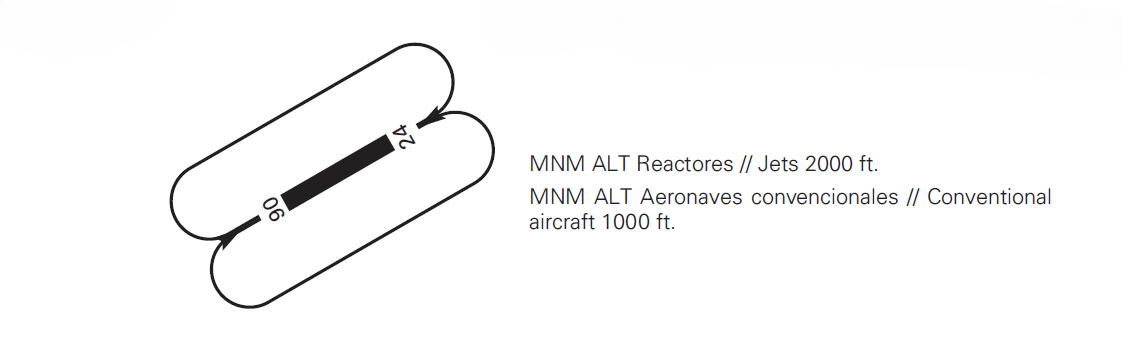
AD TRAFFIC CIRCUIT
ADDITIONAL INFORMATION
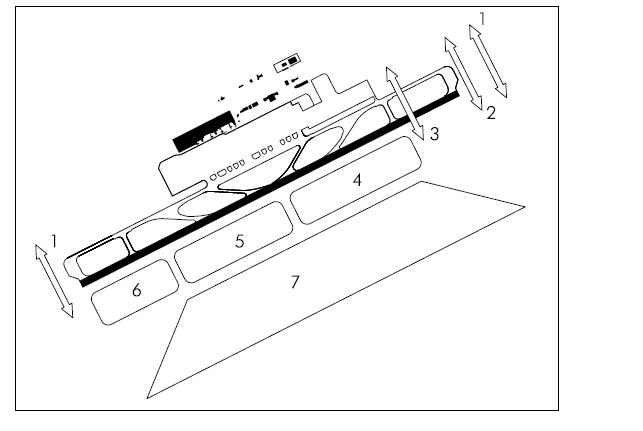
BIRD CONCENTRATION AREAS
AREA 1.- Crossing of seagulls, specially at sunrise and sunset.
AREA 2.- Crossing of small birds (fringillidae and ploceidae) from sunrise to midday.
AREA 3.- Crossing of stone curlews during the night.
AREA 4.- Resting area of plovers and lapwings. Only in winter.
AREA 5.- Overflight area of small birds (fringillidae and ploceidae).
AREA 6.- Overflight area of kestrels.
AREA 7.- Salinas Natural Park. Concentration of seagulls, ducks, herons, cormorants, flamingos and other aquatic birds.
MEDICAL EMERGENCY ON BOARD
In the event that a passenger requires medical attention, the ATC service shall inform the pilot of existing procedure for urgent medical care on board.
Aeronautical charts related to an aerodromeCHARTS RELATED TO THE AERODROME
The list of charts related to the aerodrome can be found on the link below:
VISUAL SEGMENT SURFACE (VSS) PENETRATION
IAC 1 RNP Z RWY 06 (LPV ONLY): LPV.
IAC 2 RNP Y RWY 06: LNAV, LNAV/VNAV.
IAC 6 RNP RNP Z RWY 24 (LPV ONLY): LPV.
IAC 7 RNP Y RWY 24: LNAV, LNAV/VNAV.
IAC 12 VOR RWY 24: Direct approach.